Monthly Archives: March 2015

Restructuring the novel

scissorsWhen I started the novel several years ago I created a dual timeline. The main heroine, Juliet, granddaughter of Annie, goes to Australia to follow in her grandparents’ footsteps (though she has another secret reason for going), and interspersed with her story is her grandmother, Annie, as a young girl, and linking the two stories by way of diaries and letters and events.

Called The Voyagers, this became a huge novel of 148,000 words which no agent or publisher would touch, especially from an unknown fiction writer. Three interested agents suggested the same thing – that I separate the two stories. I was already writing what I thought was the sequel, Kitty’s Story, so I was quite upset at the idea. That is, until my fantastic critique writing partner, Alison Morton (author of the Roma Nova series), who knows my characters almost as well as I do, immediately said: ‘Separate the two and Kitty becomes the third, so you’ll have a trilogy!

As soon as she said that, I knew it was exactly right for my saga. But when I separated Annie and Juliet, the proportion was all wrong. Annie only had 49,000 words; Juliet, on the other hand, had a standard 99,000 words. So I set to and delved deeper into Annie and what happened to her, and she has now evolved as a 125,000 word novel. I’m so glad I took Alison’s advice, as I realised when I was developing Annie’s character and story that she deserves to have her own full-length book.

And because both Annie and Juliet sail to Australia, I was bound to have to go too! Purely for research, of course. More in my next blogpost!

Research coincidences

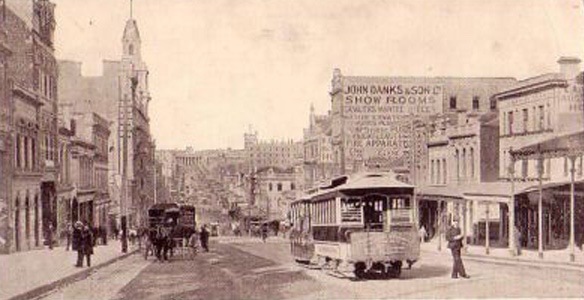
melbourne1912

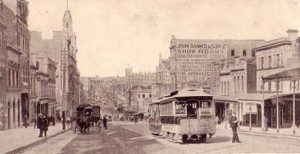
Melbourne 1912

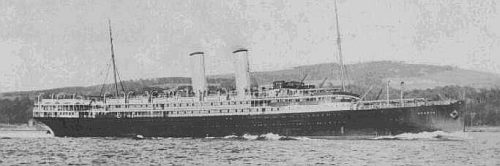
I find when I tell people I’m writing a novel that not only are they intrigued but they become amazingly helpful. I hinted in my previous post that I needed to know the route my grandparents took when they emigrated to Australia in 1913, as my heroine, Annie, and her new husband are on that same ship – the Orsova, bound for Melbourne.

I tapped in ‘Orsova’ on Google and up came an article about the Duckles family, a married couple and their little daughter, Florence. They had sailed on the Orsova to Australia only a few months before my grandparents. The mother was called Amelia and the article gave some interesting information about what happened when the family arrived in Melbourne, but only briefly mentioned the voyage.

However, I emailed the author, Barry York, who is a journalist, historian and writer who’d posted the article, telling him how excited I was to read about a real family going on the same ship to the same country as my grandparents within the same six months. He wrote straight back and said how interested he was to read about my family and also the novel I was writing. He ended the email by asking if I would like to be put in touch with Amelia Duckles’ great niece who lives in England.

Would I? I think so…

An email came winging over from a lovely lady called Carol who has her own stained glass business in Bristol. After exchanging a couple of emails she wrote these magic words: Would you like me to send you a copy of Great-Aunt Millie’s diary of the voyage?
I couldn’t believe my eyes when I read this. The small package duly arrived and I was almost beside myself with excitement. Carol had photocopied the pages from her great-aunt Amelia’s exercise book which she’d kept on an almost daily basis, except when she was overcome with seasickness; there was the route they took and the ports at which the captain allowed them to disembark for a few hours. It was exactly what I needed to know. And more. Tiny details that you could never get from the internet or in most books. What a gift for a novelist.

I couldn’t thank Carol enough, that she trusted a stranger not to abuse/plagiarise her great-aunt’s precious notes. All Carol asked was that when (not if) my novel was published I would acknowledge her and her great-aunt. I said I’d be only too happy.
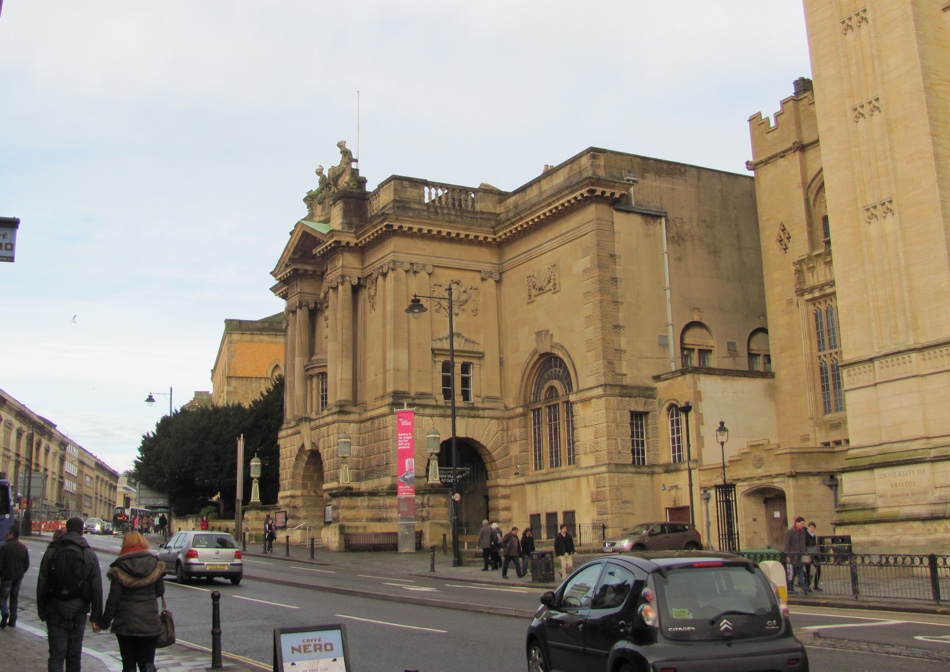
Bristol museum

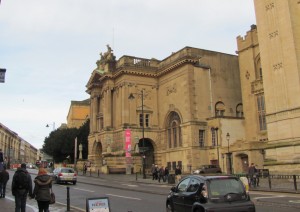
Bristol Museum

Last year she and I actually met in Bristol and we immediately clicked. I was interested to know why her great-aunt had emigrated in the first place. Carol told me that Amelia, known as Millie, had had TB, and two of her siblings had died from the same disease. Her doctor had told her that her only chance was to live in a warm country such as Australia, and so she and her husband made the life-changing decision. It must have worked because Carol thought her great-aunt had been in her seventies when she died.

After our lunch and glass of champagne Carol gave me a tourist’s look at Bristol. We promised to keep in touch. I’ve been to Bristol again very recently (it’s the home of my publishers, SilverWood Books), and caught up with her over tea in a boat café. She was delighted Annie’s Story is to be published in April. I hope she’ll be pleased to see that I’ve given her, and, of course, her great-aunt Amelia, whom she never met, a very grateful acknowledgement.

Research Unlimited

One of the best things about being a writer is that you have to do research.

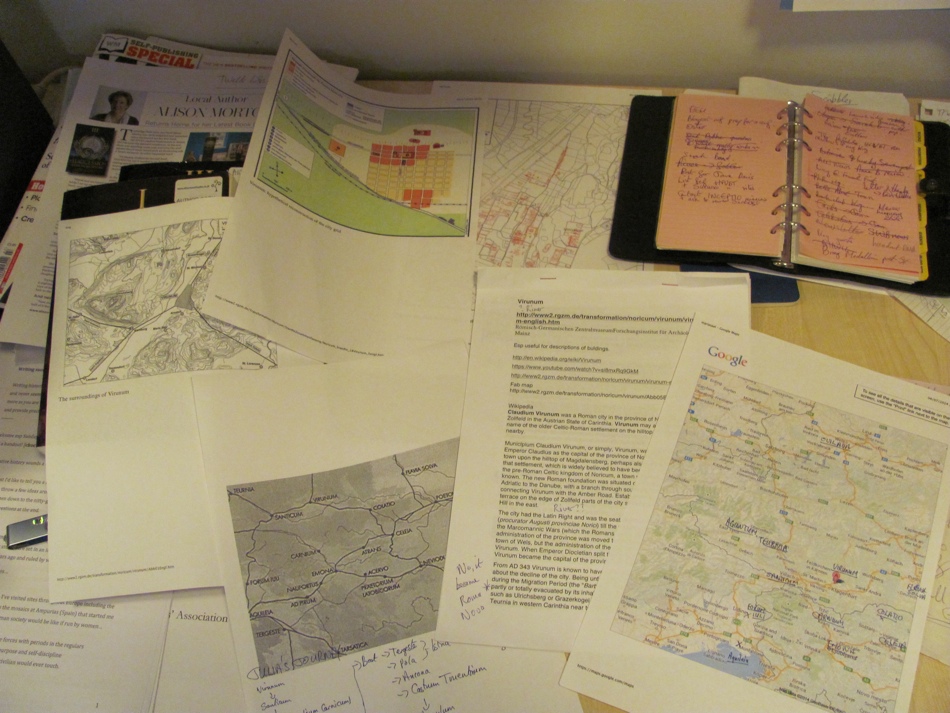
Research paperwork! (Photo courtesy of Alison Morton)

Research paperwork! (Photo courtesy of Alison Morton)

A warning –  it takes up a huge amount of ‘writing time’ and may lead you into fascinating areas that are not pertinent to your novel. However, if you’re writing historical fiction you will need to do a fair bit of research to a) find out facts, and b) check facts you think you already know. Thank goodness for the almighty Google, but remember it’s not infallible, particularly Wikipedia (although that site seems to have improved), and you should still use your reference books, biographies, maps, etc.

You don’t have to travel to the actual place to write about it. Joanne Walsh’s novella, Christmas in Venice was published in time for Christmas 2014. I ordered it on my Kindle and had a wonderful relaxing Christmas Day caught up in the story. Sheer bliss. I complimented her on her excellent evocation of Venice. ‘Thank you, but I’ve never been there,’ she said, to my astonishment.

But it’s brilliant if you can manage to visit the place you’ve set your book, as nothing’s quite the same as experiencing first hand the light and the smell and the noise and the atmosphere of an unfamiliar place.

Annie’s Story, Book 1 of The Voyagers trilogy, begins in 1913 where Annie is a housemaid in a fictitious King’s Lynn’s  country house. As I grew up in Norwich and my grandparents lived in King’s Lynn, the Norfolk settings didn’t give me too much problem. Also, my 100-year-old razor-sharp father-in-law had been a butler at several grand country houses around Britain for 40 years or so, and was a mine of information about the goings on ‘above and below stairs’.

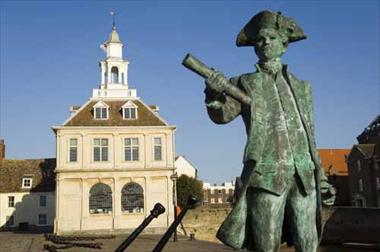
King's Lynn

King’s Lynn

My own grandparents were servants who emigrated to Australia in 1913 ‘to better themselves’, so my grandfather said. But beyond the voyage, I never asked them about what happened once they had arrived in Melbourne. Trouble is, we don’t realise how important it is to record our older relatives’ memories until it’s too late. My excuse was that I wasn’t a novelist at the time!
I didn’t know the route the Orsova took in 1913 which was important in my story. And then all the information I needed came to me serendipitously.

And that’s what my next blogpost is about…

Two paintings – enough to inspire my debut novel

ORSOVA_383Hanging on the wall in my writing cabin are two old hand-painted prints, about 2 feet across, in their original black japanned frames. My grandparents bought them as souvenirs when they were on board the R.M.S.Orsova, a ship carrying the mail and twelve hundred sea-faring passengers and crew. The young engaged couple were bound for Australia. The year was 1913. One image is of the ship in stormy seas, the other in calm.

Since a child I’ve always loved these two pictures. When our parents would take us to visit Nana and Pop in their little terraced cottage in later years, my sister would fly through the front parlour to find them, but I would always hover in front of the two ship pictures, staring at them, imagining the people on board and wondering where they were going. It was only when I was about ten that Pop told me he and Nana had sailed on that ship all the way to Australia, and I would beg them for stories about the voyage and what happened when they got there. They eventually came home with two-year-old Harold (who was to become my father), after seven years because Nana pined for her sisters. At least that was what they told me at the time. The truth was very different. If only I’d written it all down, as I only remember bits and pieces of their lives in Melbourne.

MigrantsBut the pictures were enough to give me the idea and inspiration to write my first novel, using my grandparents’ decision to emigrate to Australia as a trigger point for my heroine, Annie. But almost everything in Annie’s Story is fictitious and does not follow my grandparents’ story. I don’t want Nana and Pop performing somersaults in their grave thinking the readers will get the wrong idea!

It was a moment of connection when Tracy Chevalier gave a talk at a Persephone lunch one day on her best-selling Girl with a Pearl Earring. Apparently Tracy had Vermeer’s print on her bedroom wall since she was nineteen, and one day she wondered what story lay behind the girl in the painting.

I believe that behind every novel lurks a real-life snippet that inspires the author to get that story written down. In fact, if authors made a point of telling their audience what inspired them to write their novel, I am sure some fascinating stories would emerge.